
Nanoparticle size distribution governs surface-area-to-volume ratio, transport how to measure nanoparticle size, reactivity, optical and catalytic responses, and biological interactions. Precise control of mean diameter and polydispersity is critical for reproducible function, regulatory classification, and safety. Common metrics include number-, volume-, and intensity-weighted means, mode, and standard deviation; uncertainty and modality must be reported. Measurement techniques—DLS, EM, NTA, DCS, FFF—have distinct biases and resolution limits. Synthesis and post-processing strategies enable tuning and narrowing of distributions, and further sections outline implementation and best practices.
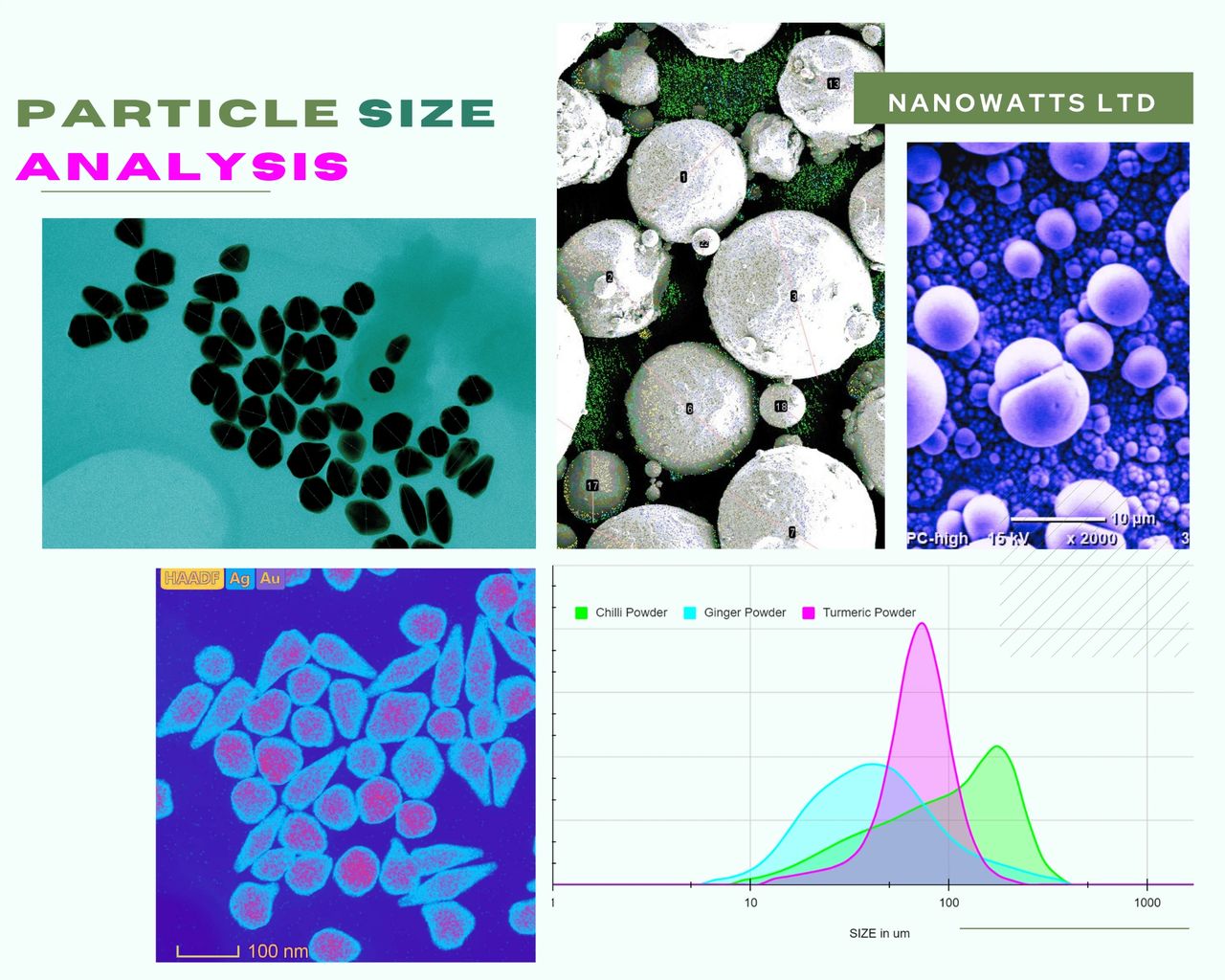
Why Particle Size and Its Distribution Matter in Applications
In many functional contexts, nanoparticle size and its statistical distribution determine key material behaviors because they directly control surface-area-to-volume ratios, interparticle spacing, and size-dependent physical properties; consequently, small shifts in mean diameter or broadening of distribution can substantially alter reactivity, optical response, transport phenomena, and colloidal stability https://laballiance.com.my/. The practitioner evaluates application-specific thresholds where modal diameter and polydispersity index influence catalytic turnover, plasmonic resonance bandwidth, diffusion coefficients, and sedimentation rates. Size heterogeneity also modulates biological interactions, affecting cellular uptake, protein corona formation, and biodistribution. Consequently, formulation strategy, process control, and lifetime prediction must incorporate distribution metrics. Moreover, regulatory implications arise from size-dependent toxicity, classification boundaries, and required characterization rigor, so specifications and quality control protocols are set to guarantee functional performance and compliance.
How Size Distributions Are Measured and Reported
Across laboratories and industry sectors, nanoparticle size distributions are quantified using a suite of complementary analytical techniques chosen for their applicable size range, resolution, and sample state. Measurement protocols specify instrument selection, sample preparation, calibration, and statistical treatment to guarantee reproducibility. Reporting standards require clear statements of modality (number, volume, intensity), distribution moments (mean, mode, standard deviation), and uncertainty estimates. Comparative interpretation relies on disclosed assumptions and limitations.
- Dynamic light scattering for hydrodynamic diameters, rapid ensemble averages.
- Electron microscopy for direct imaging and number-based distributions.
- Nanoparticle tracking analysis for individual-particle trajectories and size-by-count.
- Differential centrifugal sedimentation or field-flow fractionation for high-resolution separations.
Adherence to measurement protocols and reporting standards preserves data utility and user autonomy.

Strategies to Select, Control, and Modify Nanoparticle Size
Measurement choices and reported size metrics inform subsequent strategies for selecting, controlling, and modifying nanoparticle dimensions. The practitioner evaluates target distributions, then applies synthesis optimization to tune nucleation and growth rates via precursor concentration, temperature ramps, and reaction time. Seed-mediated growth and microfluidic synthesis enable narrow polydispersity and reproducible means to select mean diameter. Post-synthesis interventions include size-selective centrifugation, field-driven separation, and membrane filtration for fractionation. Surface engineering adjusts effective hydrodynamic size and stabilizes selected populations through ligand exchange, polymer grafting, or ionic strength modulation. In-process monitoring with orthogonal metrology guides iterative parameter adjustments, preserving functional properties while enabling freedom to define application-specific size windows and to implement robust, scalable control strategies.